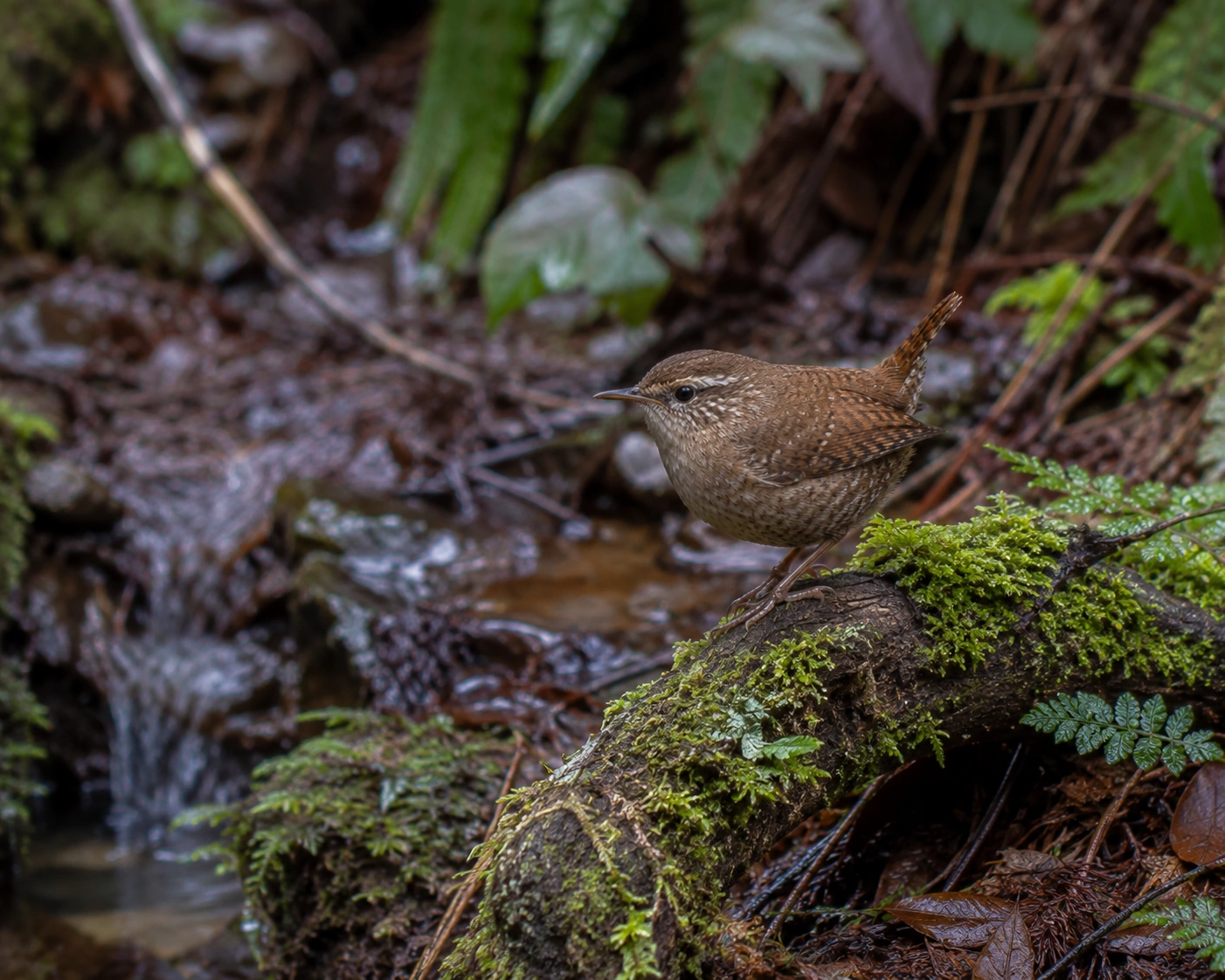
Winter Wren
Back to Birdhouse Guide
Cavity Nester ⌀ 1.125" Small

Winter Wren

Troglodytes hiemalis

Tiny brown wren of dark conifer forests, with a stubby upright tail and an absurdly loud bubbling song for a bird that weighs less than a paper clip. The most reliable cue is the song coming from a tangled root mass near a stream.

IUCN Red List
Least Concern

Widespread and abundant; no known immediate threats to the population.

Floor
4" × 4"
Interior height
6"
Entrance hole
⌀ 1.125"
Mount height
4–8 ft
Breeds
May–Jul
Broods / yr
1–2
Cool Facts

Things you didn't know about the Winter Wren

01

Its song is one of the longest and most musical in North America, sustained trills lasting up to 10 seconds, delivered by a bird weighing just 9 grams.

02

Was split from the Eurasian Wren and the Pacific Wren in 2010 based on song and genetic differences; the three are now distinct species.

03

Tied to fallen logs, root masses, and stream-side tangles in mature conifer forest, habitats that are increasingly rare.

04

Migrates only short distances and overwinters in southern conifer forests, often found in brush piles in suburban yards.

Range & Habitat

Where you'll find them

Breeds across the northern US and boreal Canada in mature conifer forests; winters in the southeastern US.

By region
  • Boreal Canada

    Breeds across the boreal zone from Manitoba east to Newfoundland and Labrador.

  • Northeast US

    Breeds in mature hemlock and spruce-fir forests of the Appalachians, Adirondacks, and northern New England.

  • Wintering grounds

    Winters across the southeastern US, especially in dense brushy wetlands and stream corridors.

dense conifer forests fallen logs stream-side thickets
10-year local observation heatmap. Click a season above to isolate one band.
Fledgemade Kit

The right house for the Winter Wren

Seasonal Care

When to install. When to clean.

Install by
By mid-April
Cleaning
Empty between broods; final clean September
Northeast & Boreal
Migratory breeder; install by mid-April after snow melt.

Builds multiple decoy nests, male may stuff several cavities with moss.