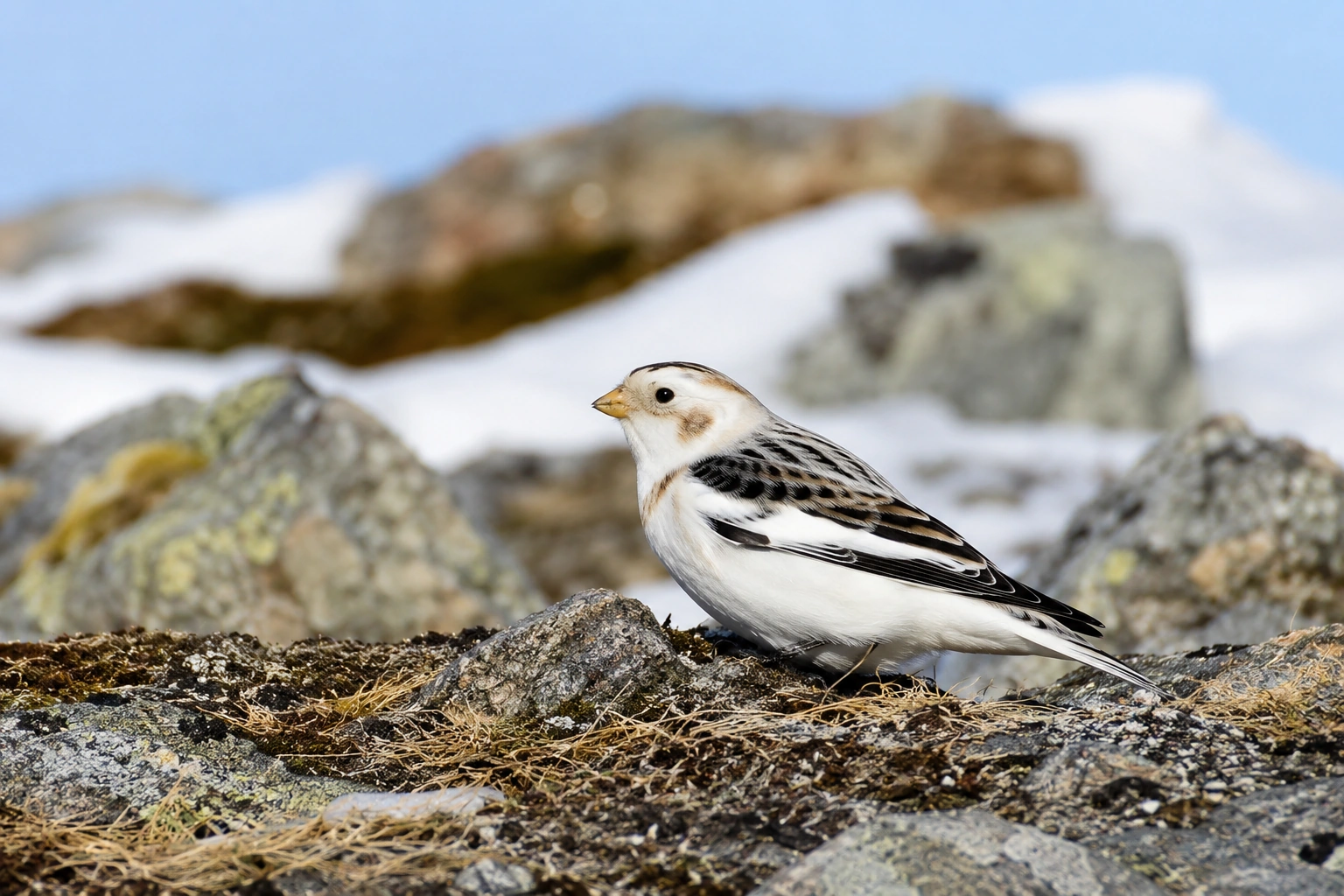
Snow Bunting
Back to Birdhouse Guide
Cavity Nester ⌀ 1.75" Medium

Snow Bunting

Plectrophenax nivalis

Stunning black-and-white songbird of the high Arctic that swirls in nomadic winter flocks across northern fields. Males arrive on breeding territory while snow is still on the ground, among the hardiest songbirds in the world.

IUCN Red List
Least Concern

Widespread and abundant; no known immediate threats to the population.

Floor
6" × 6"
Interior height
10"
Entrance hole
⌀ 1.75"
Mount height
1–5 ft
Breeds
Jun–Aug
Broods / yr
1–2
Cool Facts

Things you didn't know about the Snow Bunting

01

Breeding males return to Arctic territory weeks before snow melt, often arriving in –20°F weather and weighing barely 40 grams.

02

Builds nests deep in rock crevices or cavities, sometimes lined with up to 50 grams of feathers and fur for insulation.

03

Winters in huge mobile flocks across open fields, beaches, and grasslands of the northern US and southern Canada.

04

One of only a handful of songbirds that breeds well above the Arctic Circle, nesting up to 80°N latitude.

Range & Habitat

Where you'll find them

Circumpolar breeder above the treeline; winters across the northern US and southern Canada in open country.

By region
  • Arctic breeding

    Nests across northern Alaska, Yukon, NWT, Nunavut, and the Canadian Arctic islands.

  • Wintering grounds

    Forms nomadic flocks across the northern US (especially the Plains, Great Lakes, and Northeast) and southern Canada from late October through early April.

arctic tundra rocky coastal cliffs open grasslands
10-year local observation heatmap. Click a season above to isolate one band.
Fledgemade Kit

The right house for the Snow Bunting

Seasonal Care

When to install. When to clean.

Install by
By late May
Cleaning
Once a year, September
Arctic Canada & Alaska
Breeds June–August; install by late May.

One of the earliest songbird breeders in the Arctic. Males arrive on territory in –20°F weather.