 Back to Birdhouse Guide
Open-Front Nester
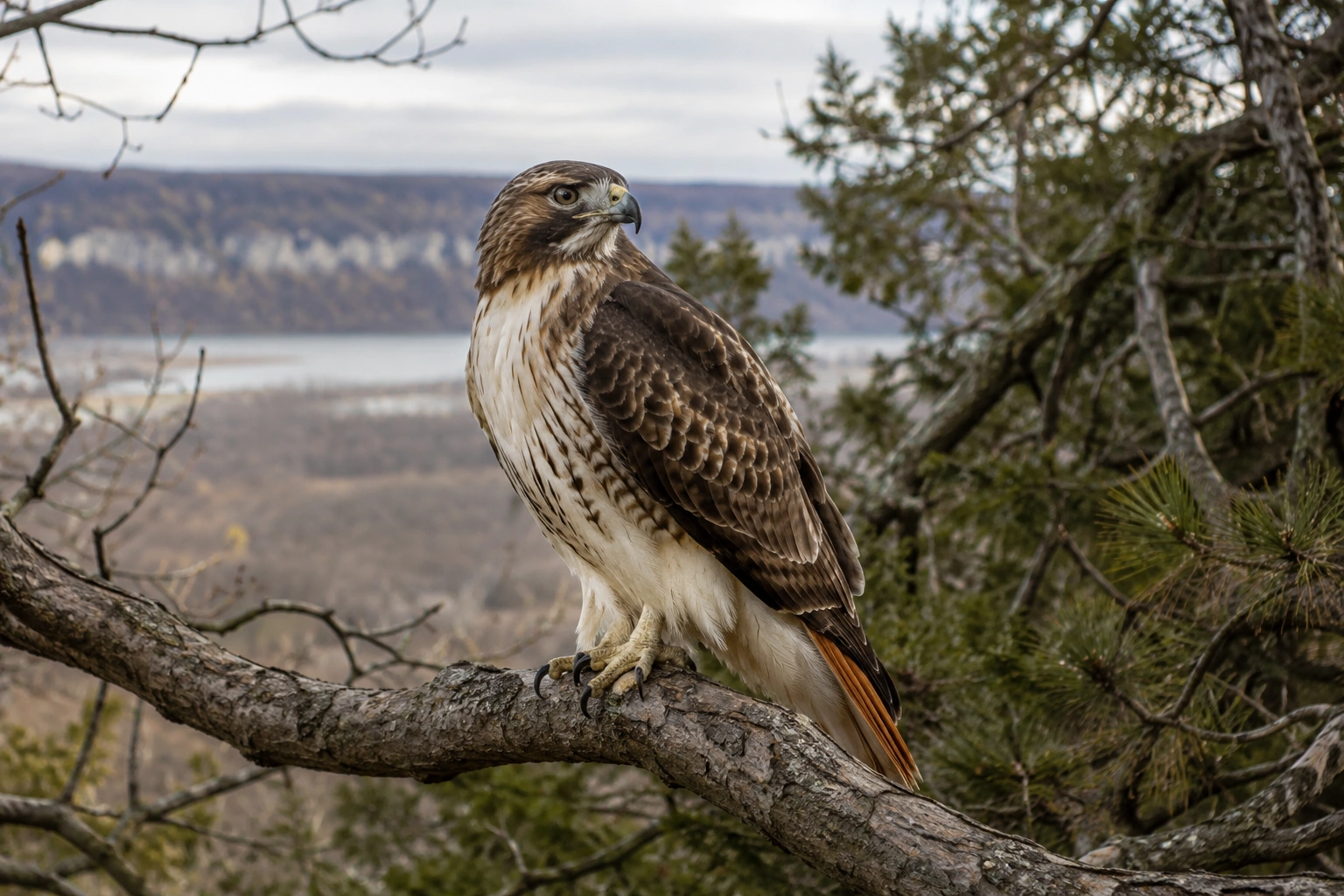
Red-tailed Hawk
Buteo jamaicensis
Back to Birdhouse Guide
Buteo jamaicensis
The most common and widespread hawk in North America, large, broad-winged, with a rust-red tail in adults. Builds enormous stick nests on platforms or in tall trees, often visible from highways.
Widespread and abundant; no known immediate threats to the population.
The most widespread and adaptable hawk in North America, found in nearly every open habitat from desert to suburb.
Their loud descending scream, actually used in films for nearly every species of raptor, is one of the most recognizable bird calls in the country.
Adults build massive stick nests, often 3+ feet across, on cliffs, tall trees, billboards, or human-made platforms.
Same pair may reuse the same nest platform for over 20 years, adding to it each spring.
Resident or short-distance migrant from Alaska and Canada south through Central America.
Common year-round across the contiguous US, southern Canada, and Mexico.
Resident south through Panama.
Outside our line due to 3D-printing or height-placement limitations. We don't currently build for this species. The published nest dimensions are listed here for reference if you're sourcing or building one yourself.
Sticks platform nests are 3+ ft across; same pair may reuse the platform for many years.