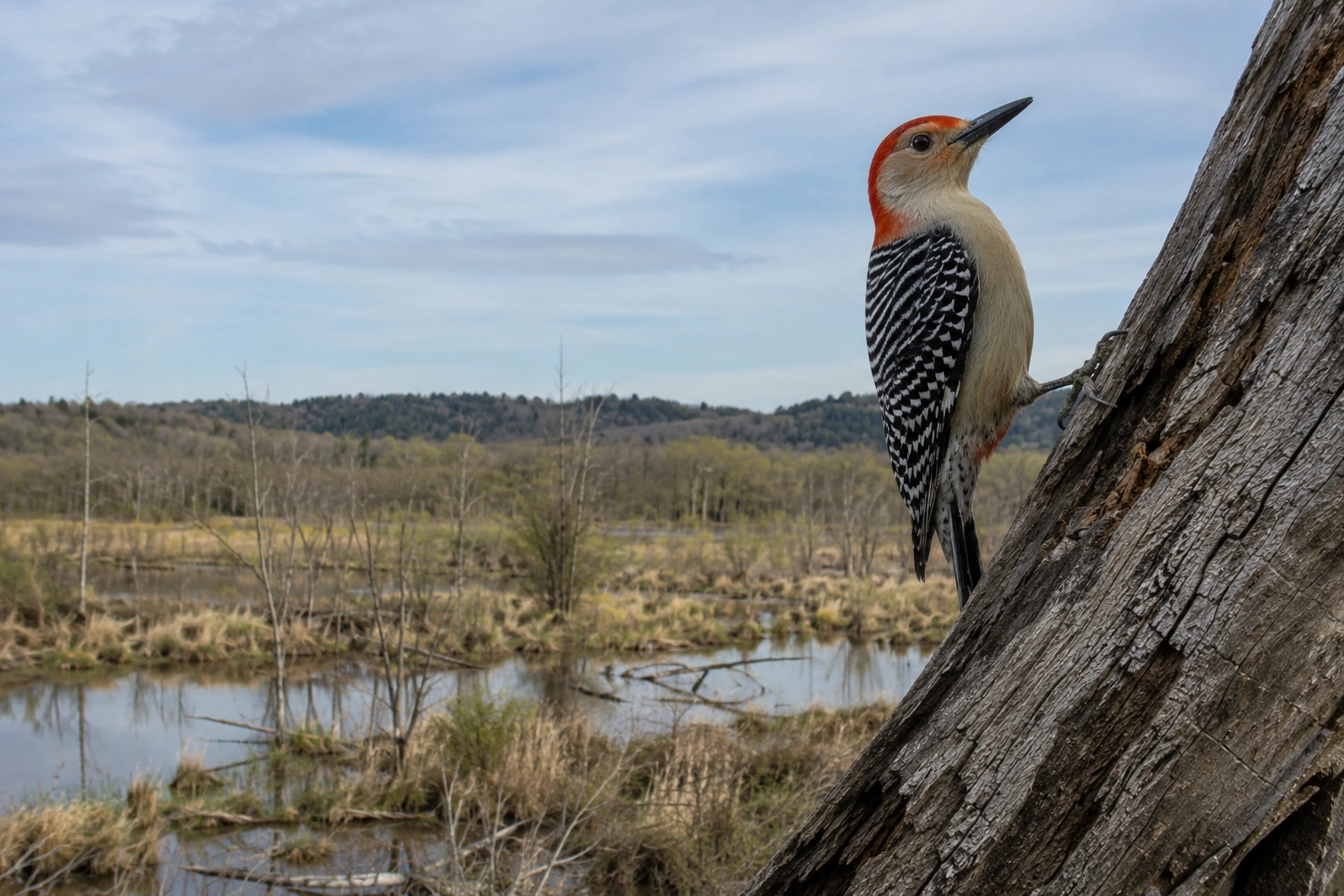
Red-bellied Woodpecker
Back to Birdhouse Guide
Cavity Nester ⌀ 2.5" Large

Red-bellied Woodpecker

Melanerpes carolinus

Common eastern woodpecker, despite the name almost entirely zebra-striped on the back with a bright red cap (the belly blush is faint). Calls loudly and frequently, a familiar voice of eastern hardwood forests.

IUCN Red List
Least Concern

Widespread and abundant; no known immediate threats to the population.

Floor
6" × 6"
Interior height
12"
Entrance hole
⌀ 2.5"
Mount height
10–20 ft
Breeds
Apr–Jul
Broods / yr
1–2
Cool Facts

Things you didn't know about the Red-bellied Woodpecker

01

The 'red belly' is faint, usually just a pink wash low on the belly, while the most visible red is on the head, leading many birders to misidentify it as Red-headed Woodpecker.

02

One of North America's most widespread woodpeckers, has expanded its range significantly northward over the past century, now common in southern Ontario and Massachusetts where it was unknown 100 years ago.

03

Caches food year-round, wedging acorns and seeds into bark crevices and cavities for later retrieval.

04

Pairs mate for life and stay together on territory throughout the year, both partners contributing to cavity excavation.

Range & Habitat

Where you'll find them

Resident across the eastern US and southern Canada, with the range expanding northward decade by decade.

By region
  • Southeast & Mid-Atlantic

    Abundant year-round from Texas east to Florida and north to New England.

  • Midwest & Great Lakes

    Common breeder, expanding north into southern Ontario and Michigan's Upper Peninsula.

mature deciduous forests wooded suburbs swamps
10-year local observation heatmap. Click a season above to isolate one band.
Fledgemade Kit

The right house for the Red-bellied Woodpecker

Seasonal Care

When to install. When to clean.

Install by
By mid-March
Cleaning
Empty between broods; final clean October
Winter use
Yes, overnight roosts
Eastern US
Resident year-round; install by mid-March for first broods.

Aggressive cavity excavator, may evict bluebirds and chickadees from boxes.