 Back to Birdhouse Guide
Cavity Nester
Rainbow Lorikeet
Trichoglossus moluccanus
Back to Birdhouse Guide
Trichoglossus moluccanus
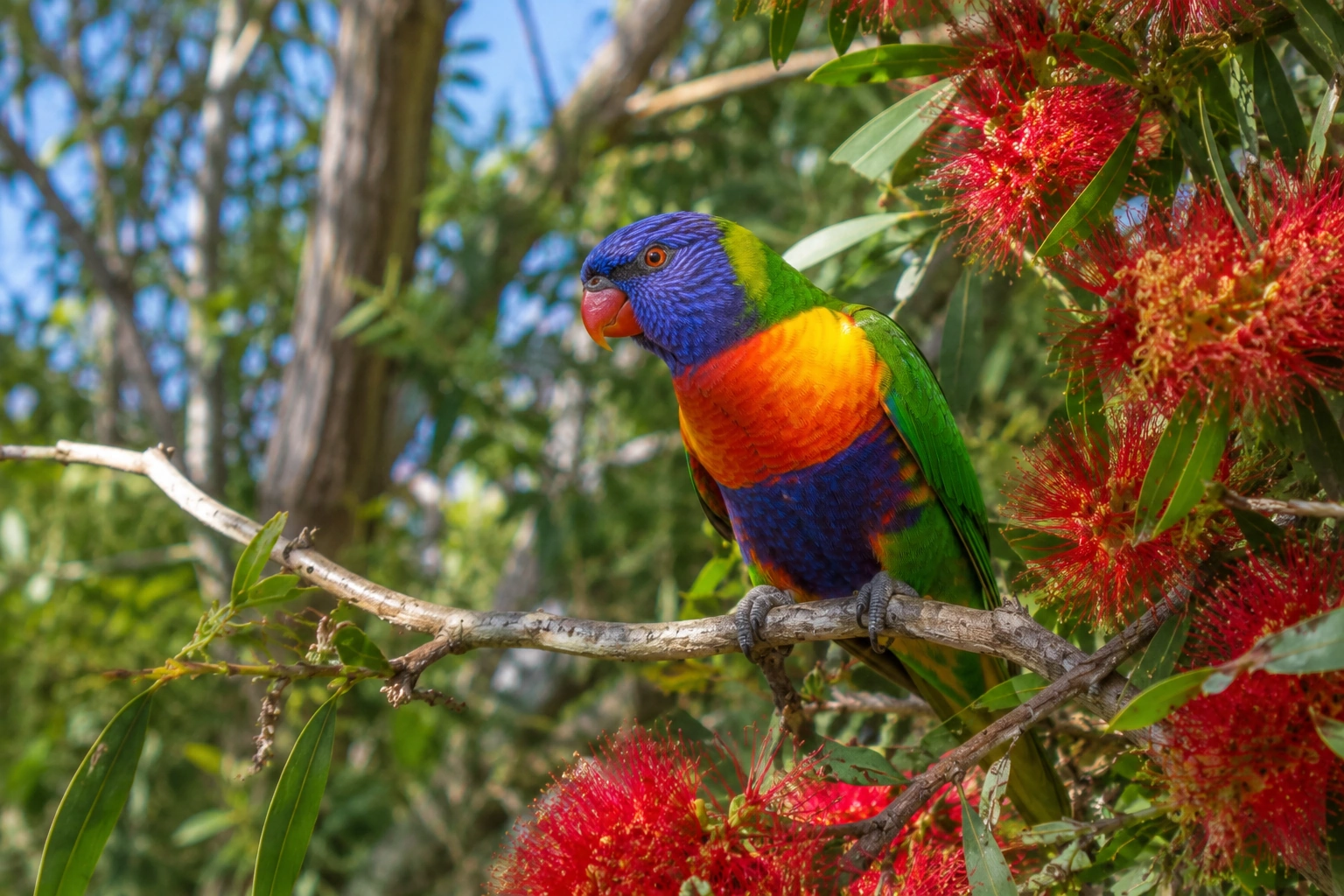
Loud, gaudy Australian parrot with a clown-bright palette of blue, green, yellow, and orange. A specialized brush-tipped tongue lets it harvest nectar and pollen from flowering eucalypts.
Widespread and abundant; no known immediate threats to the population.
Rainbow Lorikeets have brush-tipped tongues specialized for collecting nectar and pollen. Most parrots are seed-eaters.
They're one of the loudest and most aggressive Australian backyard birds, often dominating feeders.
Their range has expanded dramatically across eastern Australia, partly due to backyard feeding which they happily exploit.
Rainbow Lorikeets are easy to attract in eastern Australia, they swarm flowering trees and gardens.
Nectar feeders, fruit, and special lorikeet pellet (avoid seed-only diets that cause disease).
Native flowering eucalypts, grevilleas, and bottlebrush. These are their natural diet.
Use a 3" hole hollow log or large nest box 5+ m up on a tree.
Bird bath; heavy bathers.
Don't feed bread or honey-water. Both are unhealthy and lead to disease in lorikeets.
A common eastern Australian parrot, increasingly common in suburbs.
Year-round throughout the entire east coast from Cape York to Tasmania.
Established invasive in Perth, controversial because they displace native species.
Native populations through eastern Indonesia and New Guinea.
Open eucalypt forest, parks, gardens, and urban suburbs with flowering native trees.
This species needs a box larger or differently-shaped than our three standard sizes. We make these as one-off prints to the published nest dimensions, with all the species-specific requirements baked in.
Year-round resident in eastern AU; box doubles as roost. Wide entrance and deep cavity required.