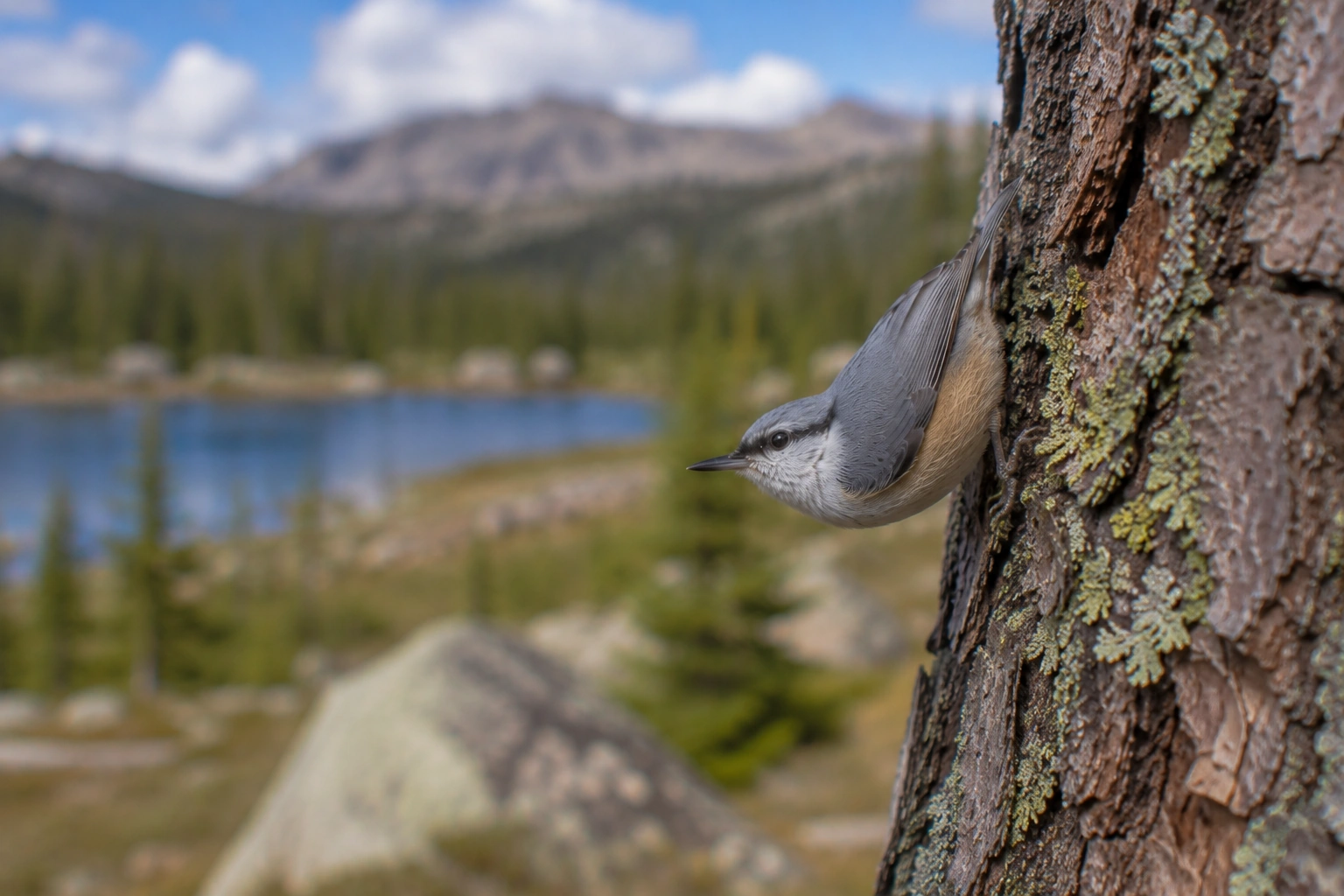
Pygmy Nuthatch
Back to Birdhouse Guide
Cavity Nester ⌀ 1.25" Small

Pygmy Nuthatch

Sitta pygmaea

Tiny grey-and-buff nuthatch of western ponderosa pine forests, famous for cramming dozens of individuals into a single tree cavity on cold nights to share body heat.

IUCN Red List
Least Concern

Widespread and abundant; no known immediate threats to the population.

Floor
4" × 4"
Interior height
8"
Entrance hole
⌀ 1.25"
Mount height
8–20 ft
Breeds
Apr–Jul
Broods / yr
1
Cool Facts

Things you didn't know about the Pygmy Nuthatch

01

Forms the largest communal winter roosts of any North American songbird, researchers have documented over 150 Pygmy Nuthatches sharing a single cavity on a freezing night.

02

A ponderosa-pine specialist whose entire range tracks the distribution of yellow-pine forests in western North America.

03

Foraging acrobat: regularly hangs upside-down at the tips of pine needles probing for insects and spiders.

04

Cooperative breeders, yearling helpers (usually offspring from prior nests) assist established pairs in raising broods.

Range & Habitat

Where you'll find them

Resident in mountain pine forests from southern British Columbia south through the western US to the highlands of central Mexico.

By region
  • Pacific Mountains

    Common in ponderosa pine forests of eastern Washington, Oregon, California's Sierra Nevada, and southern BC.

  • Rocky Mountains & Southwest

    Year-round throughout the Rockies from Montana to New Mexico, including extensive populations in Arizona and the highlands of Mexico.

ponderosa pine forests open western pines yellow pine
10-year local observation heatmap. Click a season above to isolate one band.
Fledgemade Kit

The right house for the Pygmy Nuthatch

Seasonal Care

When to install. When to clean.

Install by
By early March
Cleaning
Once a year, late September
Winter use
Yes, overnight roosts
Western US
Resident from southern BC south through the Rockies to central Mexico, tied to yellow-pine forests.

Sleeps in communal roosts of 50–100+ birds inside a single cavity in winter.