 Back to Birdhouse Guide
Open-Front Nester
Peregrine Falcon
Falco peregrinus
Back to Birdhouse Guide
Falco peregrinus
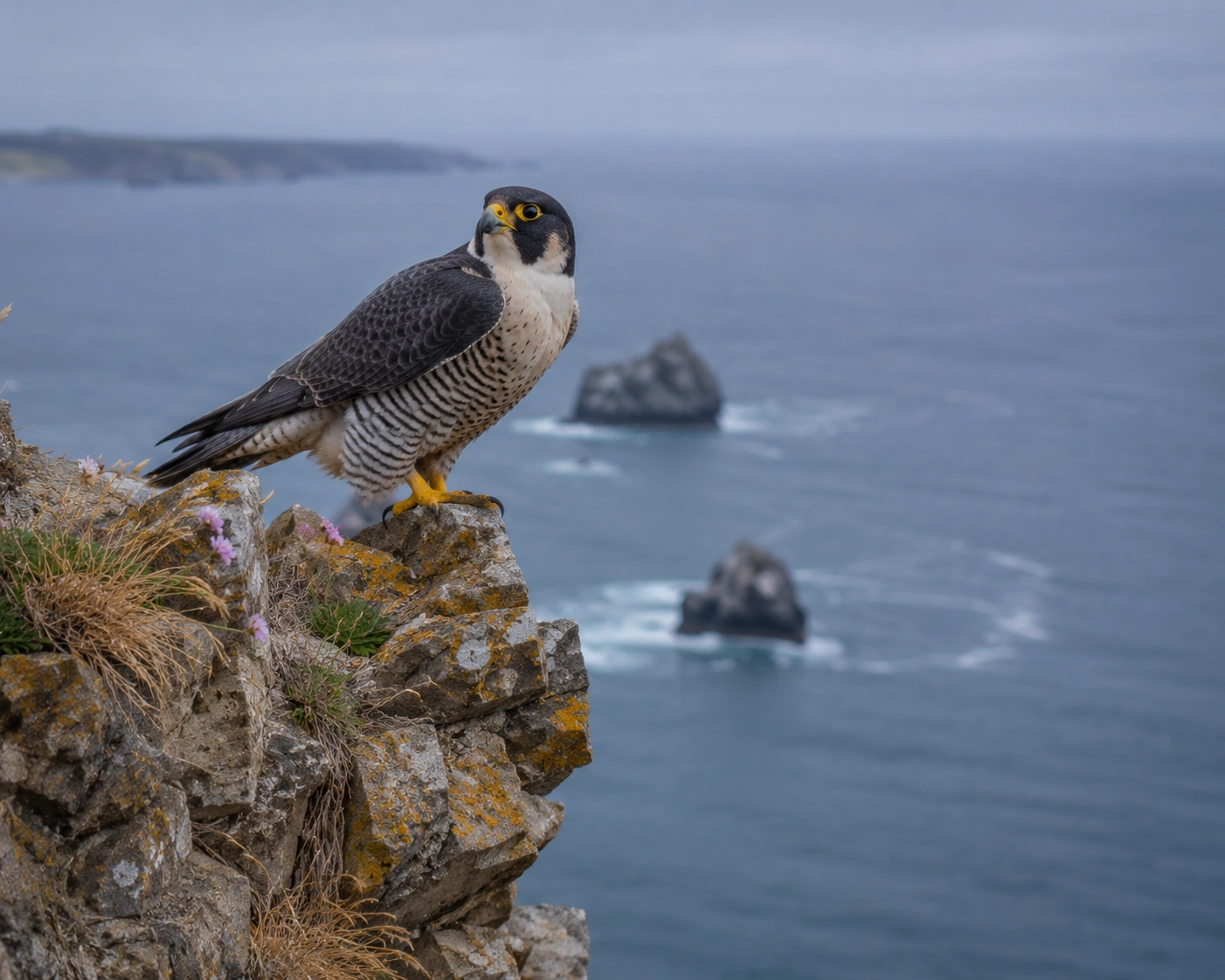
The fastest animal on Earth, diving stoops have been clocked at over 240 mph. Originally a cliff-nester, it now thrives on skyscrapers, bridges, and tall human structures across the world.
Widespread and abundant; no known immediate threats to the population.
The fastest animal on the planet, stoops have been clocked at over 240 mph in pursuit of prey.
Conservation success story, North American populations crashed in the 1960s due to DDT, then recovered through captive breeding and pesticide bans.
Now thrives in cities, nesting on skyscrapers, bridges, and water towers where they hunt feral pigeons.
Cosmopolitan species, found on every continent except Antarctica.
Resident or migratory on every continent except Antarctica; in the Americas, found from the Arctic to the southern tip of South America.
Year-round on coasts and in cities across the US, Canada, and Mexico.
Migrants pass through Central America en route to and from South American wintering grounds.
Outside our line due to 3D-printing or height-placement limitations. We don't currently build for this species. The published nest dimensions are listed here for reference if you're sourcing or building one yourself.
Conservation success story, recovered from near-extinction in the 1970s thanks to DDT bans and captive breeding.