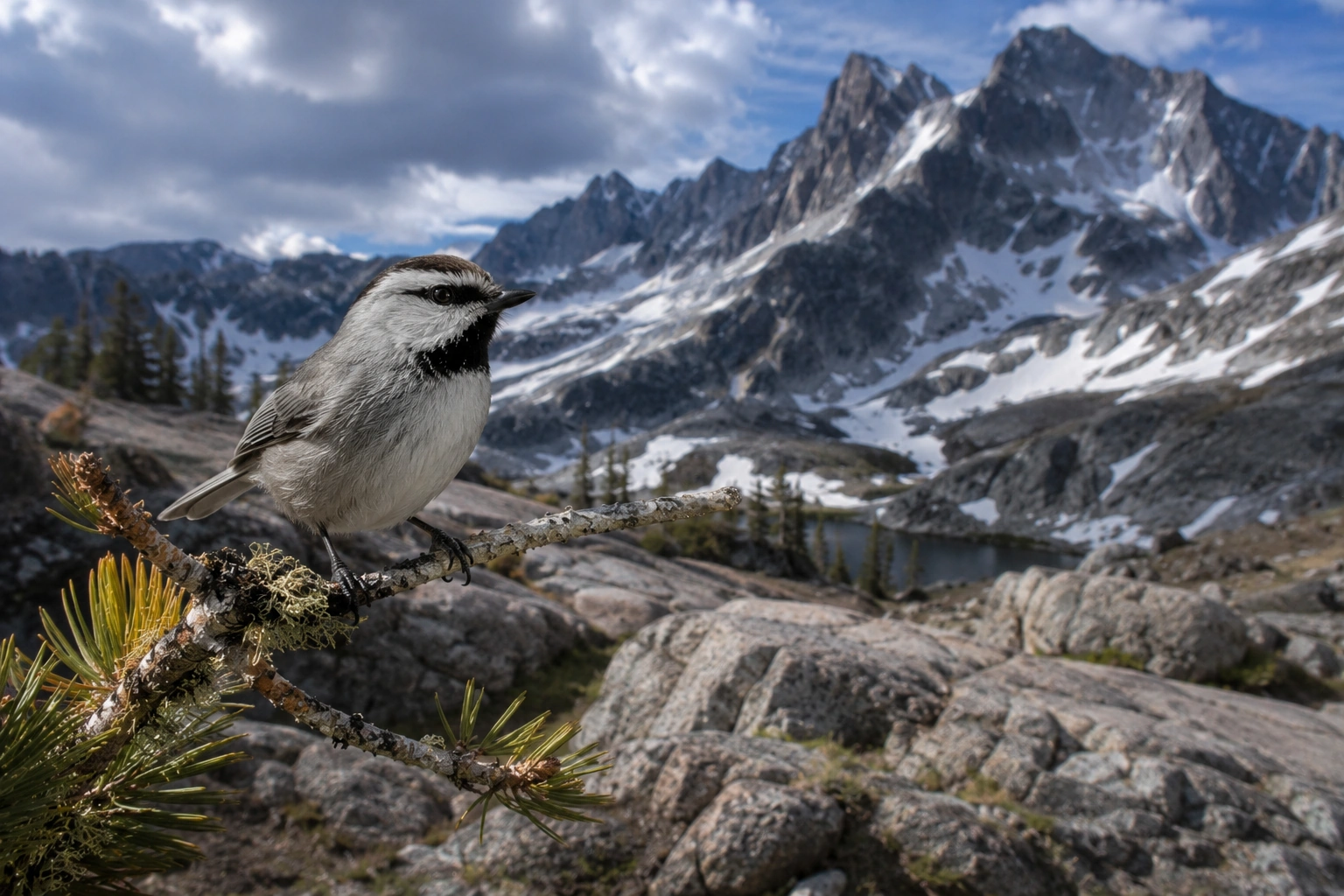
Mountain Chickadee
Back to Birdhouse Guide
Cavity Nester ⌀ 1.125" Small

Mountain Chickadee

Poecile gambeli

Conifer-specialist chickadee of the western mountains, recognizable by the bold white eyebrow stripe. Smaller and more vocal than its eastern cousins, often heard before seen.

IUCN Red List
Least Concern

Widespread and abundant; no known immediate threats to the population.

Floor
4" × 4"
Interior height
8"
Entrance hole
⌀ 1.125"
Mount height
6–15 ft
Breeds
Apr–Jul
Broods / yr
1
Cool Facts

Things you didn't know about the Mountain Chickadee

01

Caches thousands of food items every fall and remembers each cache location through the winter, their hippocampus actually grows in autumn to handle the memory load.

02

Lives at higher elevations than any other North American chickadee, regularly nesting above 10,000 ft in the Rockies.

03

The white eyebrow stripe makes them instantly distinguishable from Black-capped Chickadees in overlap zones.

04

Pairs stay together year-round and defend the same nesting territory for multiple seasons.

Range & Habitat

Where you'll find them

Resident throughout the mountainous western US and southwestern Canada, from the eastern Cascades and Sierras across the Rockies to the Mogollon Rim in Arizona and New Mexico.

By region
  • Rocky Mountains

    Common breeder from the southern Yukon and BC south through Idaho, Montana, Wyoming, Colorado, and into northern Mexico.

  • Great Basin & Pacific Mountains

    Resident in conifer forests of Nevada, Utah, eastern Oregon, and the Sierra Nevada of California.

  • Southwest

    Year-round in the highlands of Arizona and New Mexico, descending in winter to lower-elevation pine-oak zones.

coniferous forests pine-oak woodlands high-elevation forests
10-year local observation heatmap. Click a season above to isolate one band.
Fledgemade Kit

The right house for the Mountain Chickadee

Seasonal Care

When to install. When to clean.

Install by
By early April
Cleaning
Once a year, late September
Winter use
Yes, overnight roosts
Rockies & Great Basin
Resident year-round; install boxes by early April for breeding pairs.
Pacific Mountains
Resident; common in lodgepole and ponderosa pine forests above 4,000 ft.

Cavity adopter, uses old woodpecker holes and nest boxes interchangeably.