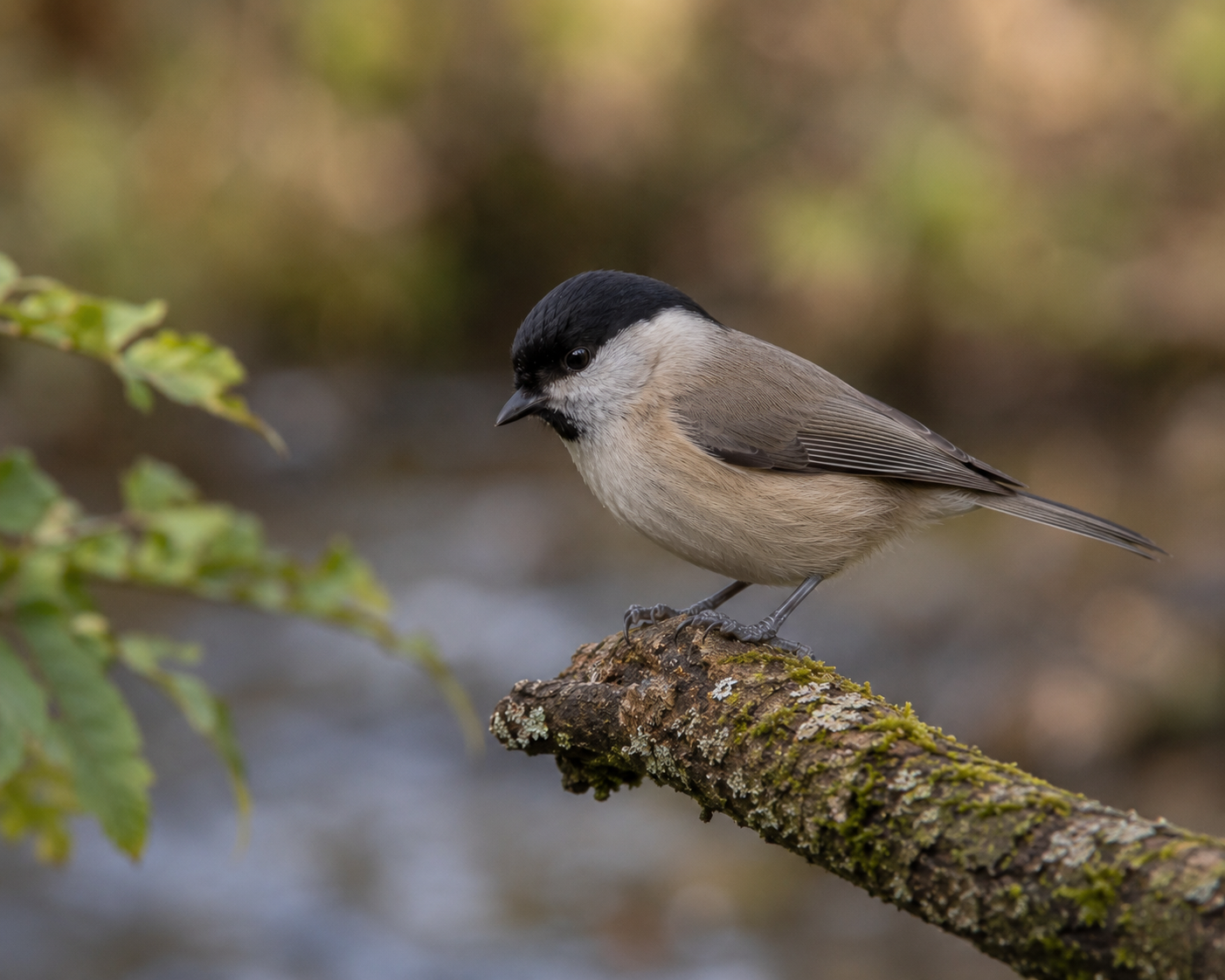
Marsh Tit
Back to Birdhouse Guide
Cavity Nester ⌀ 1.0" Small

Marsh Tit

Poecile palustris

Glossy-capped little tit of mature oak and beech woods. Nearly identical in plumage to Willow Tit, but separable by its sneeze-like 'pitchew' call and the small, neat black bib. The 'marsh' name is misleading - it's a dry-woodland bird.

IUCN Red List
Least Concern

Widespread and abundant; no known immediate threats to the population.

Floor
4" × 4"
Interior height
8"
Entrance hole
⌀ 1.0"
Mount height
5–15 ft
Breeds
Apr–May
Broods / yr
1
Cool Facts

Things you didn't know about the Marsh Tit

01

The 'marsh' name is a 250-year-old taxonomic mistake. They're almost never found in wetlands - mature dry deciduous woodland (oak, beech, hornbeam) is their actual home. The name dates to the 1700s, when 'marsh tit' and 'willow tit' were lumped together; the wetland-adjacent records were probably the latter species.

02

Glossy-capped Marsh Tits and dull-capped Willow Tits look nearly identical. The best field clue isn't plumage - it's voice. Marsh Tit's sharp, sneeze-like 'pitchew!' is diagnostic. If you hear 'pitchew', it's a Marsh Tit; if you hear a buzzy, drawn-out 'eez-eez-eez', it's a Willow Tit.

03

They don't excavate their own holes - unusual for a tit. Marsh Tits depend on pre-existing cavities (old woodpecker holes, natural rot pockets, well-sited nest boxes), which is one reason their UK population has crashed >70 % since the 1970s as mature woodland has been tidied up.

04

A Marsh Tit hides thousands of food items each autumn - beech mast, hornbeam seeds, sunflower hearts, even bits of mealworm - tucked into bark crevices, moss, and lichen. Lab studies show they remember individual cache sites for at least a month, sometimes longer.

05

They're tiny but bold around feeders: grab a single seed, fly off to cache it, return within seconds for the next. A backyard flock of three or four Marsh Tits can clear a peanut feeder in under an hour by stashing the contents in nearby trees.

Attract Them

How to bring the Marsh Tit to your yard

Marsh Tits will visit gardens that border mature woodland but rarely cross open spaces to reach isolated feeders. The best strategy is to be the woodland-edge garden, with old trees and a hole-fronted box installed early.

Food

Sunflower hearts, peanut granules, beech mast, suet pellets. Feeders work best on or beside a tree trunk rather than out in the open - Marsh Tits grab and cache rather than perch and eat.

Box placement

A 25 mm-hole nest box, 1.5–4 m up on the trunk of a mature deciduous tree (oak or beech ideal), facing away from prevailing rain. Install in autumn so they can prospect through winter.

Cover & landscaping

Mature trees with knotholes and rot pockets are the actual habitat. If you have one mature oak, a Marsh Tit pair is realistic; if you have a paddock-style garden, they won't come.

Competitors

A 25 mm hole excludes Great Tit, House Sparrow, and Starling. Blue Tits will still compete. Marsh Tits often defer, so put up two or three boxes spread 20 m+ apart if Blue Tits are already nesting.

Leave standing deadwood, dead branches, and tangled ivy. They forage on dead twigs for over-wintering insects and use rot holes as alternate cavities.

Avoid

Don't 'tidy' old trees by removing rot holes or dead limbs - those are the breeding sites Marsh Tits depend on. Don't bother trying to attract them to a treeless garden; the species needs a woodland edge to work at all.

Range & Habitat

Where you'll find them

Resident across the European broadleaf belt and on through temperate Asia. Strongly tied to mature deciduous and mixed woodland - oak, beech, hornbeam - not wetlands despite the name. Common in continental Europe; sharply declining in the UK.

By region
  • British Isles

    Resident year-round in southern England and Wales, mostly absent from Scotland and Ireland. UK populations have collapsed >70 % since 1970, putting them on the British Red List. Mature, undisturbed deciduous woodland with plenty of standing deadwood is the limiting habitat.

  • Continental Europe

    Widespread and common across France, the Low Countries, Germany, central Europe, and the Balkans. Holds steady wherever old broadleaf forest remains. Less common in Mediterranean Iberia and absent from most of Scandinavia north of the broadleaf zone.

  • Eastern Europe & Russia

    Resident across the Russian broadleaf belt as far east as the Pacific. Confined to deciduous and mixed woodland - drops out where boreal conifer takes over.

  • East Asia

    Resident in mountain deciduous forest through northern China, the Koreas, and Japan. The Japanese subspecies has slightly warmer brown flanks. Same call-based ID problem with the local Willow Tit lookalike.

Habitat preferences

Mature broadleaf forest with plenty of standing deadwood. Oak, beech, hornbeam, alder, birch all work. Tolerates wooded gardens and parks if old trees are present. Avoids pure conifer plantations, treeless habitat, and - despite the name - actual marshes.

mature deciduous woodland oak and beech forest wooded parks gardens beside old trees
10-year local observation heatmap. Click a season above to isolate one band.
Fledgemade Kit

The right house for the Marsh Tit

Seasonal Care

When to install. When to clean.

Install by
Autumn (Sep–Nov) so the cavity has time to weather before spring prospecting.
Cleaning
September–October, after the brood has fledged.
Winter use
Yes, overnight roosts
British Isles
Resident year-round. Strongly declined in the UK since the 1970s - a Red-listed species there despite global Least Concern. Nest boxes in mature woodland edges directly help local recovery.
Continental Europe
Resident across the broadleaf belt from France to the Urals; commoner in mainland Europe than in Britain.
East Asia
Resident in deciduous and mixed mountain forest through China, Korea, and Japan.

Caches food (beech mast, hornbeam seeds, sunflower) through autumn and remembers cache sites for months. Doesn't excavate its own cavity - relies on existing holes.