Back to Birdhouse Guide
Open-Front Nester Open

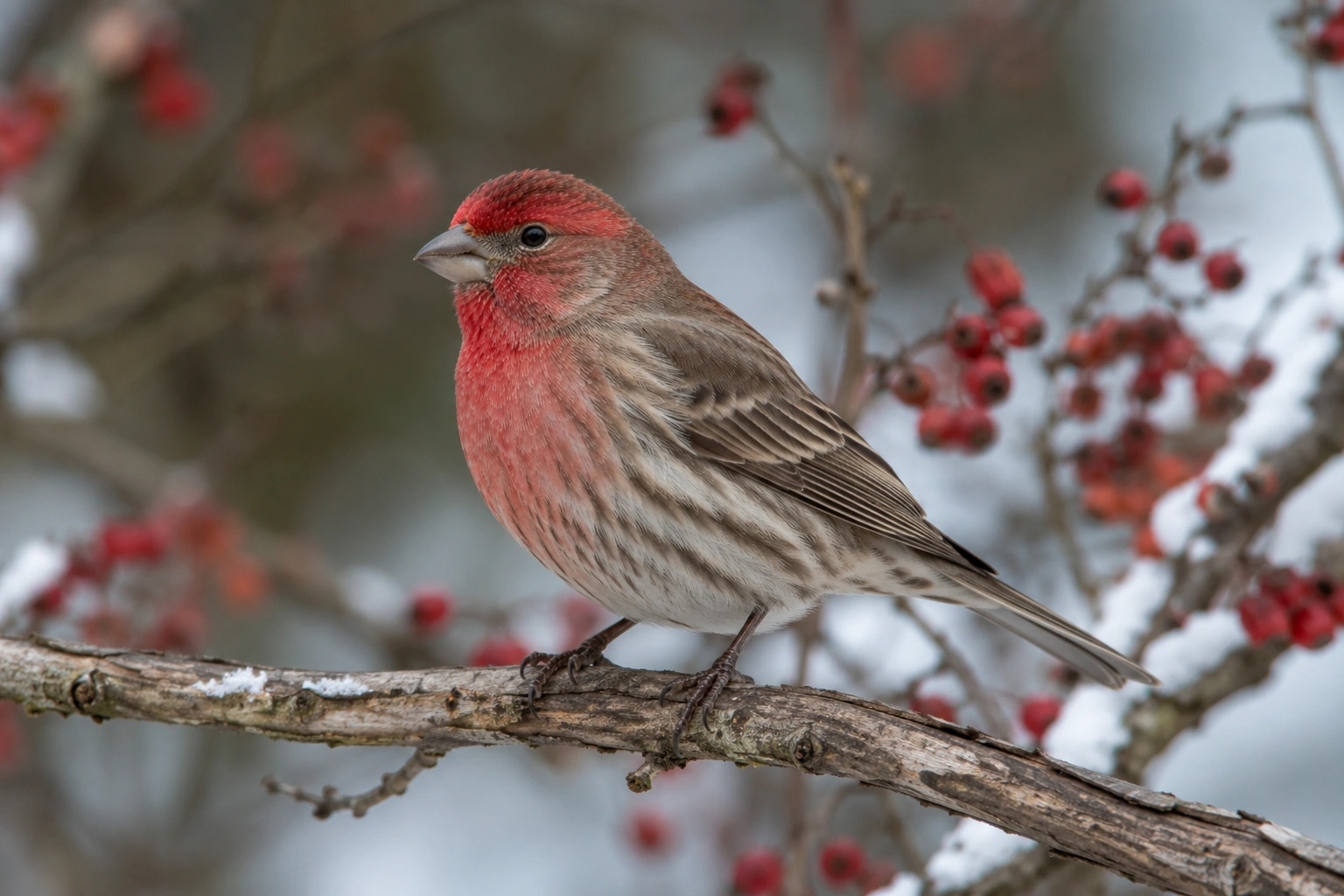
House Finch

Haemorhous mexicanus

Floor
6" × 6"
Interior height
5"
Mount height
5–10 ft
Breeds
Mar–Aug
Broods / yr
2–3
Cool Facts

Things you didn't know about the House Finch

01

House Finches were originally a southwestern bird; the eastern population descends from a few caged birds released in New York in 1940.

02

Male House Finches' red comes from their diet. Males that eat carotenoid-rich foods turn brilliant red, while poorly-fed males stay drab orange or yellow.

03

Females reportedly prefer redder males, making bright color a real signal of fitness.

Attract Them

How to bring the House Finch to your yard

House Finches are some of the easiest feeder birds to attract, sunflower seeds and water are usually all it takes.

Food

Black-oil sunflower, safflower, and especially sunflower hearts. Nyjer (thistle) in a sock feeder also draws them.

Box placement

They love nesting in hanging baskets, building ledges, and dense shrubs. The open shelf works under a covered porch or pergola.

Cover & landscaping

Conifers (any kind), dense ornamental shrubs, ivy on walls. They'll nest in almost any sheltered structure.

Water

A simple bird bath. They drink and bathe daily.

Competitors

Watch for House Finch Eye Disease (mycoplasmal conjunctivitis), clean feeders weekly with a dilute bleach solution.

Avoid

Don't disturb hanging plants once a House Finch has started a nest. They're devoted, and the nest is usually surprisingly out of view.

Range & Habitat

Where you'll find them

Originally a southwestern desert bird; now one of the most abundant urban species in North America, with separate Western and Eastern populations.

By region
  • Western US (native range)

    Year-round throughout California, the Southwest, the Mountain West, and into the southern Great Plains.

  • Eastern US (introduced)

    Now resident throughout the eastern half of the continent after spreading from a 1940 release in New York.

  • Mexico

    Resident throughout, where they originated.

Habitat preferences

Urban and suburban landscapes. They thrive in human-built environments. Building ledges, hanging plants, conifers, and shrubs all serve as nest sites.

urban areas suburban gardens porches hanging baskets ivy-covered walls
10-year GBIF + eBird observation heatmap. Click a season above to isolate one band.
Fledgemade Kit

The right house for the House Finch

Open-Front Series

Open Shelf, Small

No entrance hole, no front wall, just a sheltered ledge. Includes drainage and the integrated mounting tab.

Shop the lineup
Seasonal Care

When to install. When to clean.

Install by
By February
Cleaning
Empty between broods; final clean September
Winter use
Yes, overnight roosts
Southern US / Southwest
Resident year-round; breeding can begin as early as January.
Northern range
Largely resident; some short-distance movement in winter.

Originally a western species. The eastern population is descended from a 1940s release of caged birds in New York. Now one of the most common feeder birds in North America.