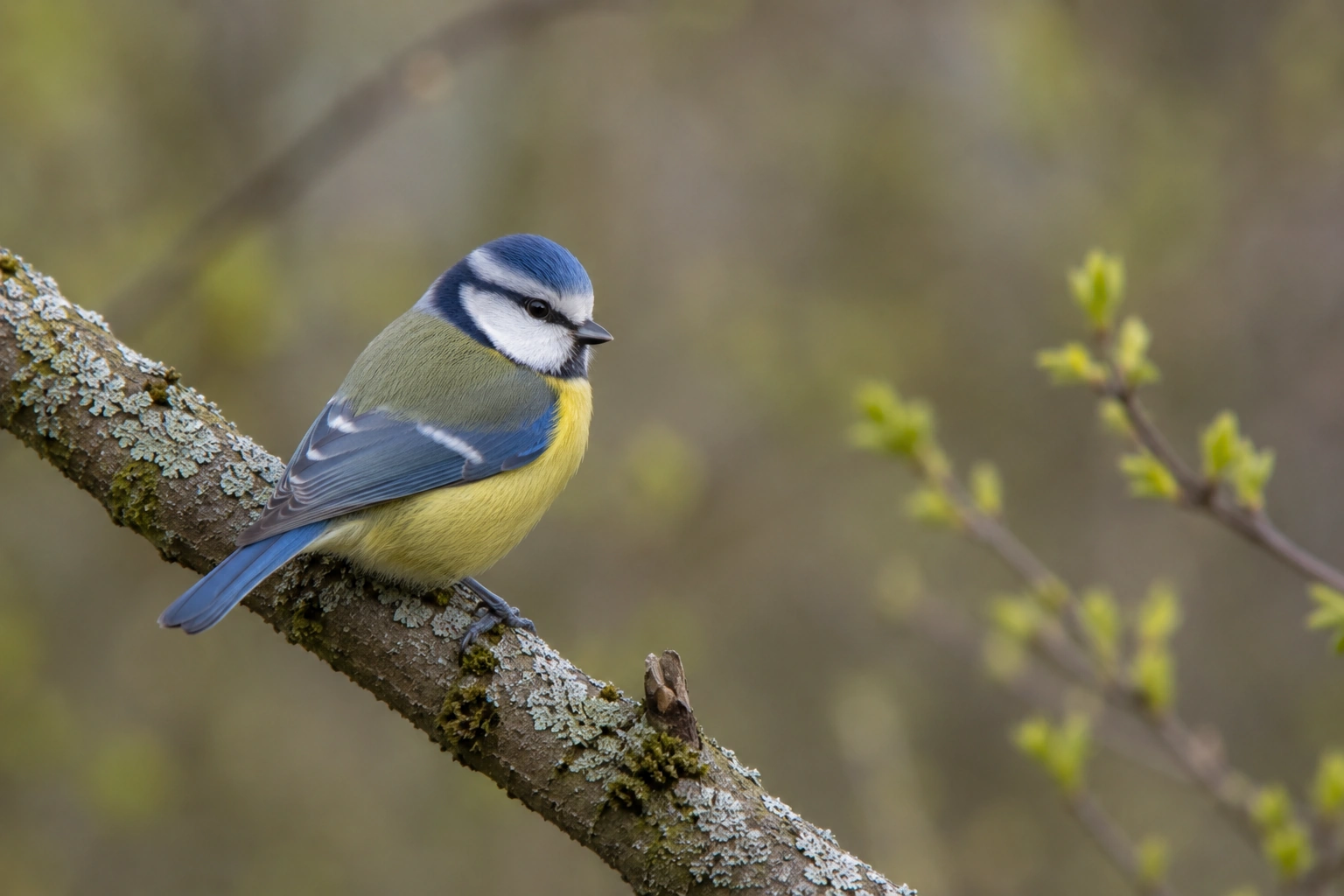
Blue Tits famously learned to peel back the foil tops of milk bottles left on doorsteps in Britain. A behavior that spread across the country in the early 1900s.
Pairs raise a single huge brood of 8–14 eggs, timed to coincide with the peak abundance of oak caterpillars.
Their azure crown reflects ultraviolet light invisible to humans; UV-bright males are preferred by females.
Blue Tits are confiding garden birds across Europe, easy to attract with a small nest box and standard garden feeders.
Sunflower hearts, peanuts, suet, and mealworms. Tube feeders, peanut cages, and tray feeders all work.
Mount a 25–28mm hole box 1.5–4 m up on a tree trunk or wall, away from direct sunlight, with a clear flight path in.
Native deciduous trees, oak especially, and dense shrubs nearby for cover.
Shallow bird bath. They bathe regularly even in winter.
House Sparrows can crowd them out near buildings. A 25mm hole excludes sparrows.
Don't use chemicals on your garden, caterpillars are essential nestling food.
A widespread Eurasian woodland bird, a backyard staple from Ireland to Russia.
Common year-round in gardens, woodlands, and parks throughout.
Resident across the continent except the far north of Scandinavia.
Resident around the Mediterranean coast, with a separate subspecies in North Africa.
Mixed deciduous woodland, hedgerows, mature gardens, parks. They especially favor oaks for the caterpillars they feed nestlings.
Body sized to 4"×4" floor. The 1⅛" panel locks out larger nest competitors while letting the Eurasian Blue Tit pass cleanly.
Shop the lineupOne of Europe's most box-friendly birds. 25–28 mm hole excludes Great Tit competition.