 Back to Birdhouse Guide
Cavity Nester
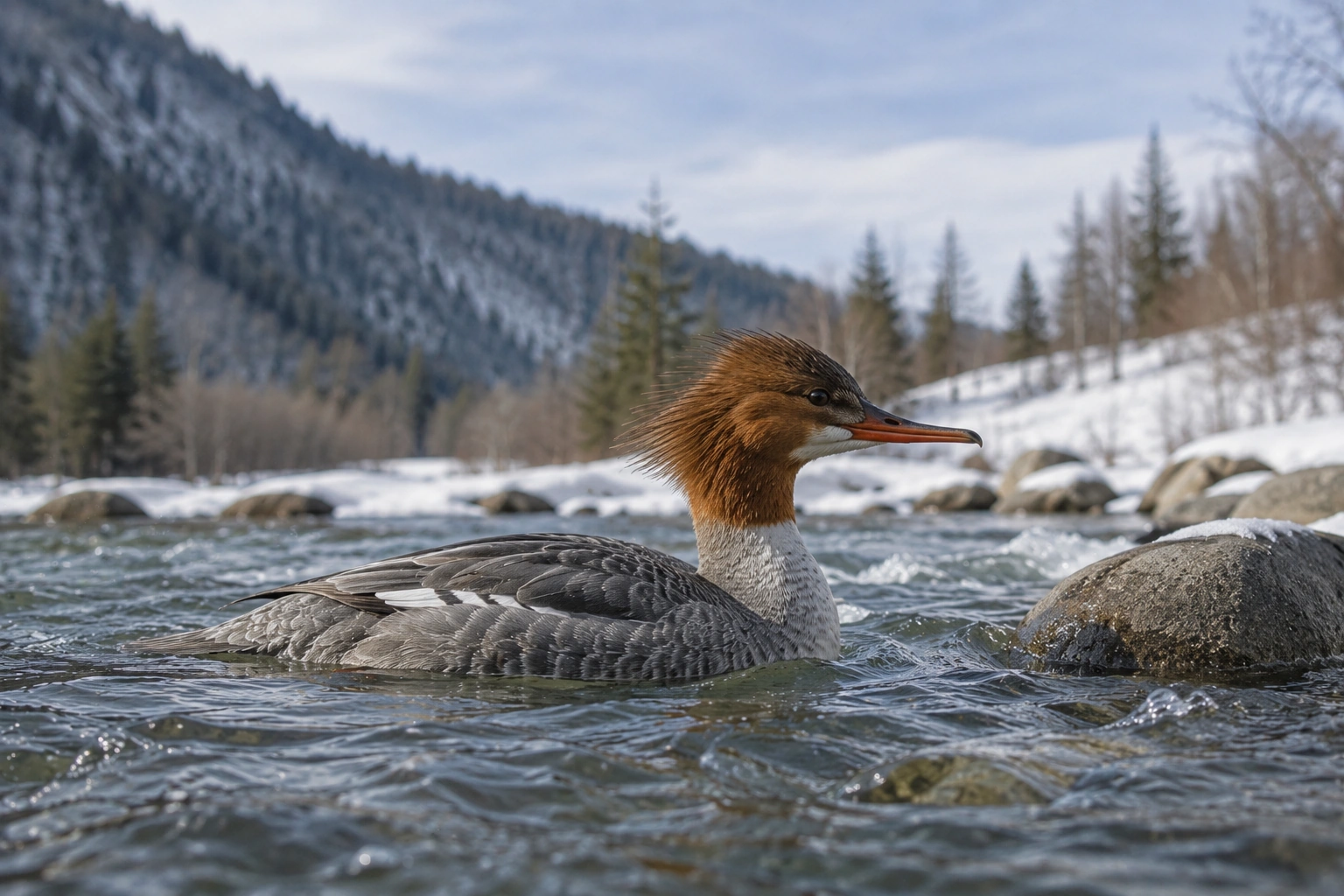
Common Merganser
Mergus merganser
Back to Birdhouse Guide
Mergus merganser
The largest North American merganser, a long, low-slung duck with a sleek crested head and a hooked saw-tooth bill. Specialist of clear cold rivers and forested lakes.
Widespread and abundant; no known immediate threats to the population.
The largest North American cavity-nesting duck, adult males can exceed 4 pounds.
The serrated saw-tooth bill is uniquely adapted for catching slippery fish, their primary prey.
Famous for crèche behaviour: a single female may end up tending broods of 50+ ducklings, having absorbed groups from other parents.
Holarctic species, same bird breeds across northern Eurasia under the name 'Goosander.'
Breeds across the boreal forest belt of North America; winters on rivers and lakes south to the southern US.
Alaska, all of Canada, the northern US tier, and along the Rockies.
Open rivers, lakes, and reservoirs across the contiguous US.
Outside our line due to 3D-printing or height-placement limitations. We don't currently build for this species. The published nest dimensions are listed here for reference if you're sourcing or building one yourself.
Holarctic, same species breeds across northern Eurasia (where it's called 'Goosander').