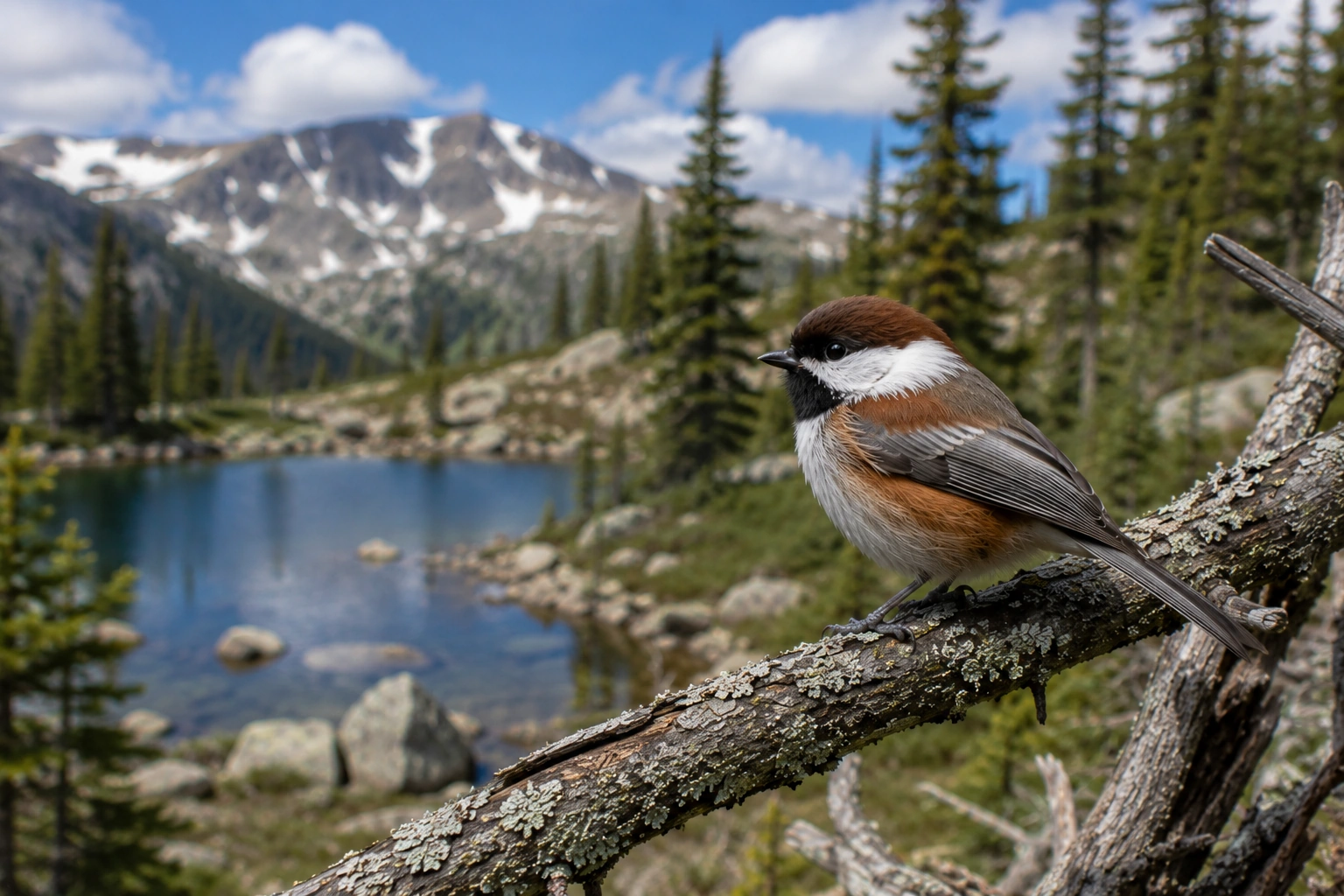
Chestnut-backed Chickadee
Back to Birdhouse Guide
Cavity Nester ⌀ 1.125" Small

Chestnut-backed Chickadee

Poecile rufescens

Vibrant chestnut-backed chickadee of damp Pacific coastal forests, with a rusty back and flanks set against the standard black cap. Often the most common bird in mature Douglas-fir stands.

IUCN Red List
Least Concern

Widespread and abundant; no known immediate threats to the population.

Floor
4" × 4"
Interior height
8"
Entrance hole
⌀ 1.125"
Mount height
5–15 ft
Breeds
Apr–Jul
Broods / yr
1
Cool Facts

Things you didn't know about the Chestnut-backed Chickadee

01

The most colorful North American chickadee, rich chestnut back and flanks contrast with the typical black cap and bib.

02

Lines nests almost entirely with moss and hair, sometimes including fur shed by deer or rabbits.

03

A coastal specialist found nowhere east of the Cascade crest, tightly tied to wet conifer forests.

04

Frequently joins mixed-species winter flocks with kinglets and nuthatches.

Range & Habitat

Where you'll find them

Restricted to the wet Pacific Coast forest band from south-central Alaska to coastal central California, plus a disjunct population in the northern Rockies.

By region
  • Pacific Northwest

    Common breeder along the Alaska panhandle, coastal BC, Washington, Oregon, and into the redwood and Douglas-fir zones of northern California.

  • Northern Rockies

    An isolated resident population in the wet cedar–hemlock forests of northern Idaho and northwestern Montana.

coastal forests wet conifer woods Douglas-fir forests
10-year local observation heatmap. Click a season above to isolate one band.
Fledgemade Kit

The right house for the Chestnut-backed Chickadee

Seasonal Care

When to install. When to clean.

Install by
By late March
Cleaning
Once a year, late September
Winter use
Yes, overnight roosts
Pacific Coast
Resident from southern Alaska through coastal BC, Washington, Oregon, and northern California.

Uses moss and fur to line nests, keep nesting cup deep.