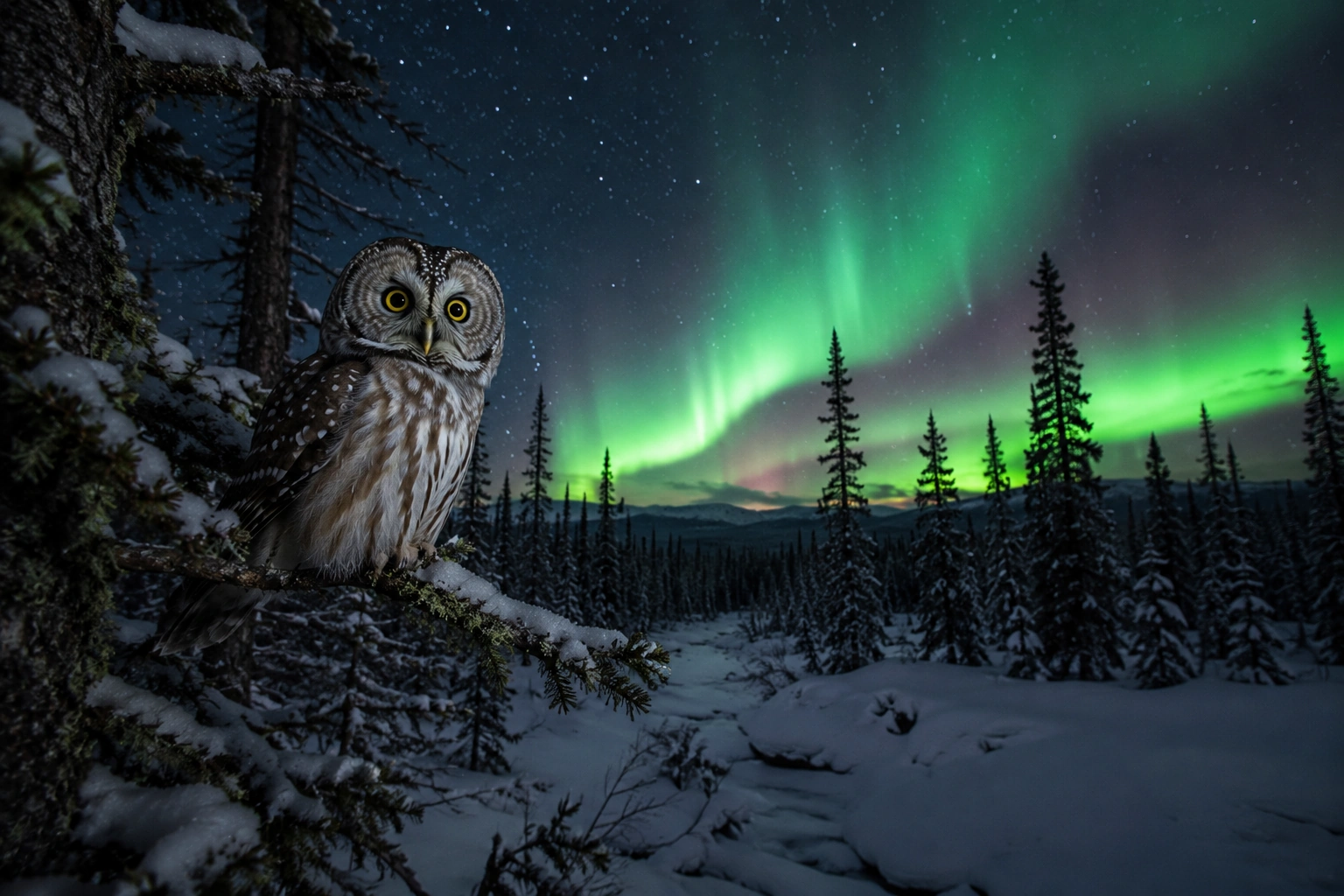
Boreal Owl
Back to Birdhouse Guide
Cavity Nester ⌀ 3.0" Large

Boreal Owl

Aegolius funereus

Small, secretive boreal-forest owl with a square pale facial disc framed in black. Strictly nocturnal and unobtrusive, far more often heard than seen. Readily adopts large nest boxes in mature spruce stands.

IUCN Red List
Least Concern

Widespread and abundant; no known immediate threats to the population.

Floor
6" × 6"
Interior height
12"
Entrance hole
⌀ 3.0"
Mount height
10–20 ft
Breeds
Apr–Jun
Broods / yr
1
Cool Facts

Things you didn't know about the Boreal Owl

01

Among the most strictly nocturnal of North American owls, far more often detected by its hollow tooting call than seen in daylight.

02

Strongly tied to mature boreal spruce and subalpine fir forests, where they nest in old flicker holes or human-provided boxes.

03

Males may maintain several nest cavities at once, attracting multiple females in good prey years (polygynous breeding).

04

Holarctic species. The same species also lives across northern Europe and Asia, where it's known as Tengmalm's Owl.

Range & Habitat

Where you'll find them

Resident in mature boreal and subalpine conifer forests from Alaska across Canada to Newfoundland, with isolated southern populations in the high Rockies.

By region
  • Boreal Canada & Alaska

    Year-round across the boreal forest zone from Alaska to Labrador.

  • High Rockies

    Isolated breeding populations in subalpine spruce-fir forests of Idaho, Montana, Wyoming, and Colorado.

spruce-fir forests mature mixed conifers boreal subalpine
10-year local observation heatmap. Click a season above to isolate one band.
Fledgemade Kit

The right house for the Boreal Owl

Seasonal Care

When to install. When to clean.

Install by
By mid-March
Cleaning
Once a year, late September
Winter use
Yes, overnight roosts
Boreal Canada & Alaska
Resident in spruce-fir forests; install in mature stands by mid-March.

Strictly nocturnal; one of the hardest North American owls to spot in the wild.